Plastic surgery
Male facelift in Turkey: a men's guide
Medically reviewed by Dr. Mehmet Yılmaz
Quick answer
A male facelift lifts and repositions the sagging tissues of the lower face and neck, but it is planned differently for men: the surgeon works around the beard and thicker, more vascular skin, keeps the sideburn and hairline natural, and hides scars along and behind the ear. Done well, it looks rested and masculine, not tight or "done". Recovery takes about two weeks.
- Male-specific planning protects the beard line, sideburn and hairline and hides scars in ear creases.
- Thicker male skin and beard blood supply mean meticulous, tension-free closure matters.
- Expect about two weeks off work; fuller results as swelling settles over weeks to months.
- At SaluVista, a facelift starts from £3,990, a guide only, confirmed by an itemised quote after assessment.
In this guide
More men are choosing facial rejuvenation. But a male facelift is not simply a female operation performed on a man. Male anatomy, beard growth and expectations all change how the surgery is planned. This guide explains what's genuinely different for men, who it suits, and how recovery and cost work in Turkey. It's part of our wider plastic surgery resources, and it's general information, not medical advice.
Why a male facelift is different
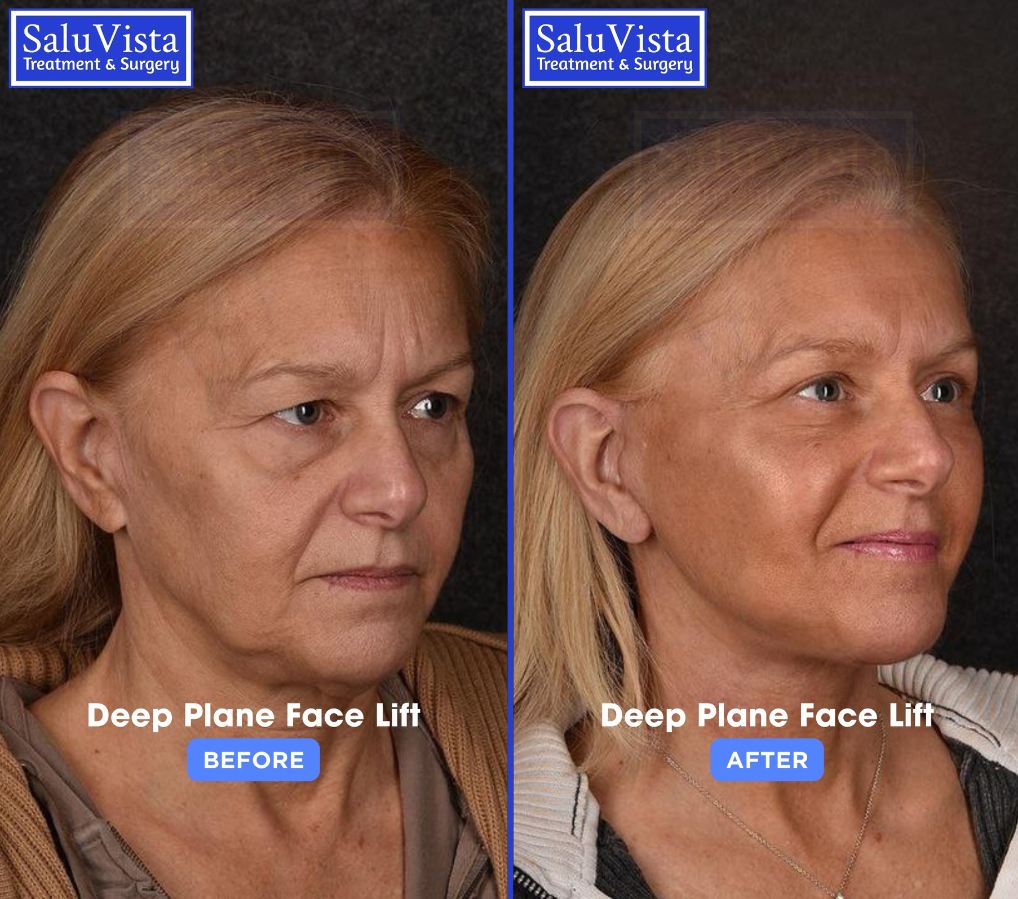
The goal of any facelift is the same: to reposition the deeper tissues (the SMAS layer) and gently redrape the skin over the lower face and neck, softening jowls and a sagging jawline. What changes for men is the canvas. Male skin is typically thicker, oilier and more vascular, which can mean more bruising and a need for very careful control of bleeding during surgery. Men also tend to want a result that reads as rested and healthy rather than obviously altered: an over-tightened, "pulled" look is more conspicuous on a man's face.
Because of this, an experienced surgeon plans a male facelift conservatively: enough lift to restore a defined jaw and neck, but never so much tension that the face looks stretched or feminised. Our academic-trained plastic surgeon Op. Dr. Caner K., who combines surgical precision with an aesthetic eye across facial work, approaches men's cases with exactly this restraint in mind.
A good male facelift is one nobody can name. People think you've slept well or come back from holiday. They don't think "surgery".
Beard, hairline & sideburn
This is where male facelifts demand the most planning. In women, incisions often tuck neatly inside a full hairline. In men, three things complicate that:
The beard follows the skin
When a surgeon lifts and redrapes cheek and neck skin, beard-bearing skin moves with it. Plan this poorly and beard hair can end up growing behind the ear, in front of the ear tragus, or even inside the ear canal, an obvious giveaway. The surgeon must anticipate exactly where hair-bearing skin will sit after healing and adjust the incision accordingly.
Protecting the sideburn
Pulling too much skin upward can lift the sideburn out of position or shorten it, which looks unnatural on a man. Careful vector planning keeps the sideburn at its normal height and angle.
The receding or thinning hairline
Men more often have a higher or receding hairline and less hair to conceal incisions, and that means scars in front of and behind the ear carry more of the concealment burden, so incision placement in the ear's natural creases becomes even more important. If hair loss is also a concern for you, our overview of male plastic surgery in Turkey covers how facial and hair procedures are sometimes sequenced.
Where the scars go
A facelift scar in men typically runs along the front edge of the ear, around the earlobe, and up behind the ear into the hairline. The beard can help camouflage the pre-auricular (in-front-of-ear) portion once it regrows. Some surgeons keep the incision in front of a small strip rather than inside the ear cartilage to avoid dragging beard skin onto it, a small decision with a big cosmetic payoff for men.
An honest note on scars. Some men are more prone to visible or raised scarring than others. Meticulous, tension-free closure reduces the risk, but no surgeon can promise an invisible scar. Scars mature and fade over many months; they never vanish completely. A responsible surgeon discusses this openly before you commit.
Are you a candidate?
A facelift addresses sagging skin and descended tissue (jowls, a loose jawline and neck banding) that skincare, injectables and non-surgical devices cannot lift. It does not treat surface skin quality, fine lines or volume loss on its own; those may need complementary treatments.
You may be a candidate if you:
- Are in reasonable general health and either don't smoke or are willing to stop well before and after surgery (smoking sharply raises healing and skin-loss risks).
- Have realistic, specific goals: restoring a firmer jaw and neck, not becoming a different person.
- Have visible lower-face and neck laxity that bothers you.
- Understand recovery, scarring and that results are natural but not permanent. Ageing continues.
Crucially, a good surgeon sometimes says no, or suggests less. If your main concern is a heavy neck alone, a neck lift may be enough, but if it's skin texture or early laxity, non-surgical options may serve you better for now. The NHS guidance on cosmetic procedures is a sensible starting point for thinking through whether surgery is right for you, and the British Association of Aesthetic Plastic Surgeons (BAAPS) stresses assessment by a qualified surgeon before any decision.
Facelift, neck lift or both
Men's ageing often shows first in the neck, a loose "turkey neck" or blunted jaw angle. Depending on your anatomy, the right operation may be a facelift, a neck lift, or a combined face and neck lift for a harmonious result. Combining is only advised when it's safe and appropriate for you.
| Facelift | Neck lift | Face & neck lift | |
|---|---|---|---|
| Main target | Cheeks, jowls, jawline | Neck laxity & banding | Lower face and neck together |
| Best when | Mid-face & jowl sag dominate | Neck is the main concern | Both age together |
| Scars | Around the ear | Around ear, sometimes under chin | Around ear (& possibly under chin) |
| From (guide) | £3,990 | £2,680 | £5,355 |
These "from" figures (roughly €4,700, €3,160 and €6,320 at £1 ≈ €1.18) are guides only. Your combination and price are confirmed by an itemised quote after individual assessment.
Recovery week by week
Male facelift recovery is staged. Swelling and bruising settle gradually, and the final, natural result takes time to emerge. Patience matters.
Week one
Expect the most swelling and bruising now, sometimes with a dressing or light support garment. You'll rest with your head elevated. Discomfort is usually manageable with prescribed pain relief. Sutures often start coming out toward the end of this week.
Weeks two to three
Remaining sutures are removed (commonly by days seven to fourteen). Most men feel socially presentable and ready to return to desk work by about two weeks, though residual swelling and some numbness around the ears and jaw persist.
Weeks four to six and beyond
Strenuous exercise and heavy lifting usually resume around four to six weeks, guided by your surgeon. Numbness fades over weeks to months, and the fuller, settled result appears as swelling resolves over several weeks to a few months. Scars continue to mature and fade for up to a year or more.
Shaving and the beard. Cheek and neck skin is numb and healing early on. Most surgeons advise waiting one to two weeks before shaving gently near the incisions, and taking extra care until sensation returns, nicks are easy when you can't feel the razor.
Wondering if a facelift is right for you — or if less would do?
Share a few details and photos in the app, and speak with your surgeon before you travel. You'll get an honest, personalised recommendation. That includes if surgery isn't the right step for you yet.
Ask on WhatsApp →Cost in Turkey
At SaluVista, a facelift starts from £3,990 (≈ €4,700) and a combined face and neck lift from £5,355. A neck lift alone starts from £2,680. These are owner-approved "from" prices and guides only; your actual cost is set by a transparent, itemised quote after individual assessment, because it depends on the technique used, whether procedures are combined, and your anatomy.
Turkey's lower cost base means these figures typically sit well below UK equivalents, but price should never be the reason you choose surgery or a surgeon. Safety, the surgeon's judgement and honest expectations come first. For a fuller breakdown of what goes into the number, see our guide to facelift costs in Turkey.
Frequently asked questions
Is a facelift different for men?
Yes. Men usually have thicker, more vascular skin and a beard that grows on the cheek and neck, so incisions and skin tension are planned to avoid pulling hair-bearing skin behind the ear or distorting the sideburn. The aim is a rested, natural masculine result rather than an over-tightened or feminised one, which changes how the surgeon approaches the hairline and scars.
Where are the scars on a male facelift, and will my beard hide them?
Incisions are placed along and behind the ear and into the hairline. In men the beard can help conceal the scar in front of the ear, but the surgeon must avoid moving beard-growing skin over the ear or into the ear canal. Because male skin heals with more visible scarring in some men, careful, tension-free closure matters. Scars mature and fade over months but never disappear entirely.
How long is recovery from a male facelift?
Most men take about two weeks off work. Bruising and swelling are heaviest in the first week, sutures come out around days seven to fourteen, and you look socially presentable by two to three weeks. Fuller results appear as swelling settles over several weeks to a few months. Strenuous exercise and heavy lifting usually wait four to six weeks, guided by your surgeon.
Can I shave after a facelift?
Not straight away over the operated areas. The cheek and neck skin is numb and healing early on, so most surgeons advise waiting one to two weeks and shaving very gently near the incisions once cleared. Numbness around the ear and jaw can last weeks to months, so extra care is needed until sensation returns.
How much does a male facelift cost in Turkey?
At SaluVista a facelift starts from £3,990 (about €4,700) and a combined face and neck lift from £5,355 as a guide only. The final figure is set by an itemised, transparent quote after individual assessment, because it depends on the technique, whether a neck lift is added and your anatomy. Price should never be the deciding factor for surgery.
Am I a good candidate for a male facelift?
Good candidates are in reasonable health, non-smokers or willing to stop, with realistic goals and visible lower-face and neck sagging that non-surgical options can't fix. A responsible surgeon will sometimes advise a smaller procedure, a non-surgical option, or no surgery at all. Get the SaluVista app to be assessed.
This article is general information, not medical advice, and does not replace a consultation with a qualified surgeon. Individual results, risks and recommendations vary, and a qualified human surgeon makes the final decision after assessment. Always discuss your options and risks with a medical professional.