Plastic surgery
Facelift in Turkey: cost & honest guide (2026)
Medically reviewed by Dr. Mehmet Yılmaz
Quick answer
A facelift in Turkey with SaluVista starts from £3,990 / $5,370 (≈ €4,700). A combined face & neck lift starts from £5,355 / $7,205 and a mid-facelift from £2,785 / $3,750. A facelift lifts and repositions sagging tissue of the lower face and jawline. It doesn't stop ageing or change skin quality. Your final price is confirmed in an itemised quote after assessment.
- From £3,990 / $5,370 for a facelift — a guide "from" price, not a flat fee.
- It repositions and tightens the lower face and jowls — it does not freeze time or fix skin texture.
- Results are long-lasting but not permanent: your face still ages naturally afterwards.
- A good surgeon sometimes advises a smaller procedure — or none at all.
In this guide
Few operations in aesthetic surgery get misread as often as the facelift (rhytidectomy). In the right hands it softens jowls, tidies a loose jawline and leaves you looking rested, but chosen for the wrong reasons, or sold as a way to "stop ageing", it lets people down. This guide walks through what a facelift in Turkey really costs. It also covers what it can and cannot achieve, and how to think it through honestly. Treat it as background to help you prepare, not medical advice.
What a facelift costs in Turkey
At SaluVista, a facelift starts from £3,990 / $5,370 (≈ €4,700). The right operation depends on which areas actually need attention. So a few "from" prices help you compare:
| Procedure | From price | Approx. € |
|---|---|---|
| Facelift | from £3,990 / $5,370 | ≈ €4,700 |
| Face & neck lift | from £5,355 / $7,205 | ≈ €6,320 |
| Mid-facelift | from £2,785 / $3,750 | ≈ €3,285 |
| Neck lift (alone) | from £2,680 / $3,605 | ≈ €3,160 |
| Brow / temporal lift | from £2,785 / $3,750 | ≈ €3,285 |
Every figure above is a "from" price and a guide only. It isn't a flat fee or an all-in total, because the operation has to be built around your anatomy and your goals, and once you've spoken with your surgeon and been assessed, you get a transparent, itemised quote with no surprise add-ons. For the full picture on pricing, see our plastic surgery hub.
Why "from" and not an exact price? A facelift that only tackles early jowling is a genuinely different operation from a face-and-neck lift with skin and deeper-layer work, and honest pricing has to reflect that. Be wary of any clinic that quotes one fixed number before it has even seen your face.
What a facelift can & cannot do
Start with the one idea everything else rests on: a facelift repositions what you already have. It lifts descended tissue. And it tightens the deeper structural layer (the SMAS) of the lower face and jawline. It doesn't turn back a calendar. And it won't make you a different person.
What it can do
- Soften jowls and restore a cleaner jawline.
- Reduce sagging skin and tissue in the lower third of the face.
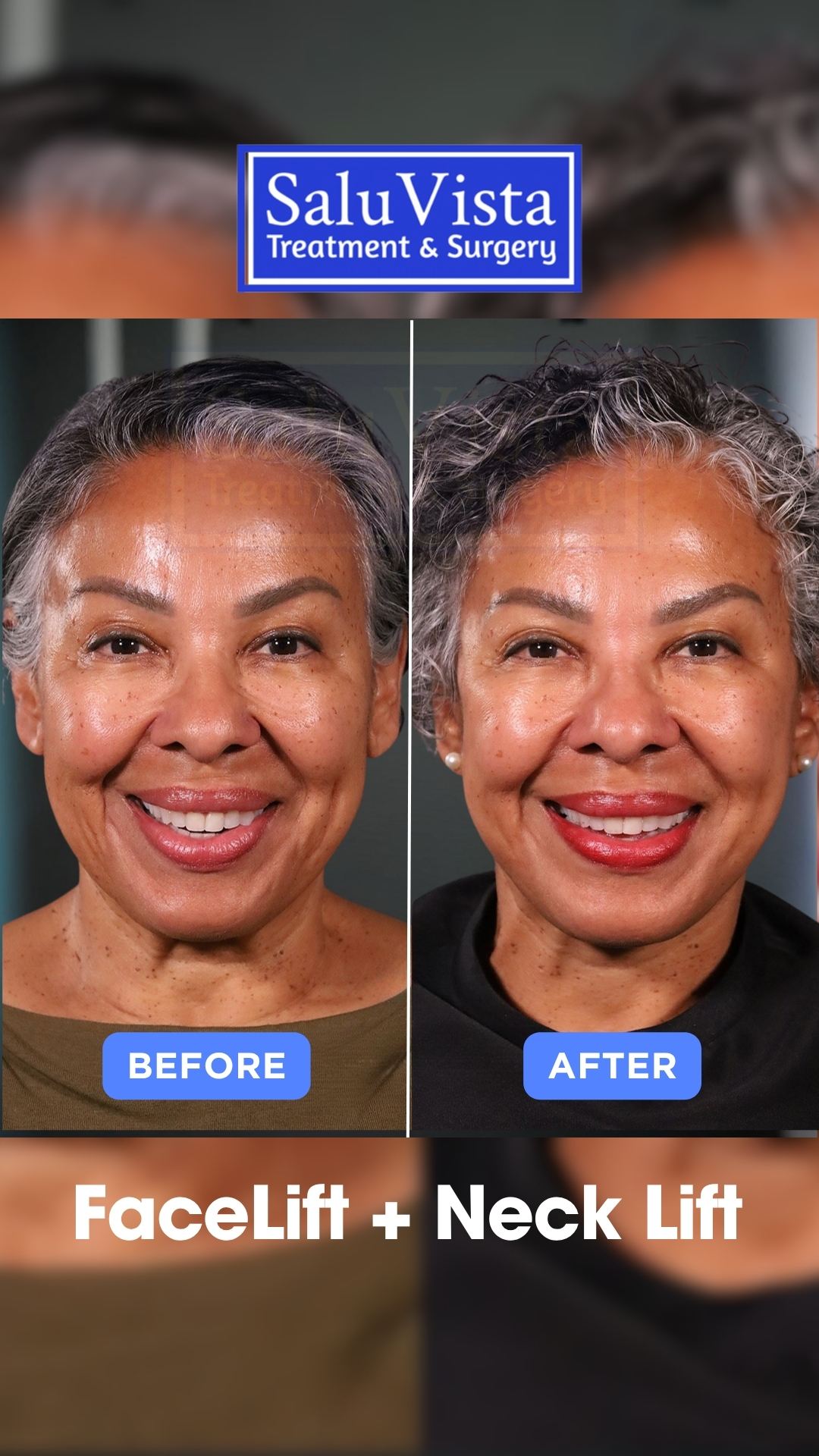
- Tighten a loose neck when combined as a face & neck lift.
- Give a rested, natural look — not a "pulled" one when done conservatively.
What it cannot do
- It cannot stop ageing or freeze your face at one point in time.
- It cannot fix skin quality, fine lines, sun damage or pigmentation — those need skincare or resurfacing.
- It cannot lift the brow or eyelids on its own — those may need a brow lift or eyelid surgery.
- It cannot restore lost facial volume alone; some patients also benefit from facial fat transfer.
A facelift is a repositioning operation, not a time machine. The best results look like a well-rested version of you — not a stranger.
Are you a good candidate?
The people who do well tend to share a few things: reasonable general health, being a non-smoker (or willing to stop well before and after surgery, since smoking slows healing), realistic expectations, and visible sagging of the lower face or neck that a lift can genuinely address.
Just as important is knowing when a facelift is not the answer. If what bothers you is skin texture, fine lines or lost volume rather than sagging, a lift can under-deliver, and a smaller procedure or a non-surgical route may serve you better. That's the moment an honest surgeon earns their reputation.
Sometimes the answer is "not yet" — or "not this". Our surgeons will tell you if a mid-facelift, a neck lift alone, or simply waiting suits you better than a full facelift. A recommendation against surgery is a sign of good care, not a lost sale.
Your plastic and aesthetic surgery is led by Op. Dr. Caner K., a board-certified plastic, reconstructive and aesthetic surgeon whose eye covers both facial and body work, and you speak with your surgeon before you travel, screening and booking happen in the SaluVista app, and a qualified human makes the final decision on whether to operate.
Facelift techniques compared
"Facelift" is really an umbrella term. Which technique fits depends on how much laxity you have and where it sits, and your surgeon matches the operation to your face rather than the other way round.
| Option | Best for | What it addresses |
|---|---|---|
| Mid-facelift | Early cheek & mid-face descent | Lifts the mid-face and cheek; smaller in scope |
| Facelift (SMAS) | Jowls & lower-face sagging | Lifts the deeper layer plus skin of the lower face & jawline |
| Face & neck lift | Lower face and loose neck together | Combines a facelift with neck tightening |
| Neck lift alone | Neck laxity with a good jawline above | Targets the neck without a full facelift |
Plenty of patients walk in assuming they need "the full thing", and a mini vs full facelift conversation often shows a smaller operation fits better, but if your concern sits mostly below the jaw, start with our neck lift in Turkey guide instead. Combining procedures is only right when it's safe to do in one sitting. Never for the sake of convenience.
Honest longevity — your face ages naturally afterwards
Here's the part a lot of clinics skate over: a facelift resets the clock, but doesn't stop it. From the day of surgery your face carries on ageing normally. Most people enjoy their result for several years, though how long it holds depends on your skin type, genetics, lifestyle (sun exposure, smoking, weight changes) and the technique used.
No responsible surgeon will promise you a fixed number of years. Or a specific aesthetic outcome. Anyone selling "10 years, permanent, wrinkle-free" is overselling. What a good facelift does do reliably is set you a step behind where you would otherwise be: you keep ageing, just from a fresher starting point.
You will still age after a facelift. The goal is to age from a better baseline, not to become ageless.
Recovery expectations
Recovery is a staged process, not a single event. Most people describe tightness, bruising and swelling rather than severe pain. It's kept in check with prescribed medication. A realistic rough guide:
- First 1–2 weeks: bruising and swelling peak, then begin to settle; dressings and sutures are managed by your team.
- 2–3 weeks: visible bruising fades; many return to non-physical routines and lighter social activity.
- Weeks to a few months: deeper swelling settles gradually and the final contour emerges — the result you see at three weeks is not the final result.
Everyone heals at their own pace. Treat any timeline as a rough shape rather than a promise. For a week-by-week walkthrough, our facelift recovery timeline sets it out. Charging back into strenuous activity is one of the most common self-inflicted setbacks. Patience genuinely protects your result.
Want an honest opinion on whether a facelift suits you?
Share your goals and a few photos through the app, and a specialist gives you a candid, personalised recommendation, including whether a smaller procedure, or none at all, is the wiser choice.
Get a free assessment →Choosing safely in Turkey
Turkey is a well-established destination for aesthetic surgery, but what should decide it for you is the surgeon and the standard of care, not the lowest price or the shortest wait. A few sensible questions to put to any clinic:
- Is my surgeon a board-certified plastic surgeon, and will I speak with them before I travel?
- Am I properly screened and assessed before anything is booked?
- Is the quote itemised and transparent, with no pressure to decide today?
- What does follow-up look like after I fly home?
The UK's NHS guidance on cosmetic procedures and the British Association of Aesthetic Plastic Surgeons (BAAPS) make the same two points. Check your surgeon's credentials, and never rush the decision. At SaluVista, safety comes before convenience. A qualified human surgeon makes the final call. Procedures are only combined when it's safe to do so.
Frequently asked questions
How much does a facelift cost in Turkey?
At SaluVista a facelift starts from £3,990 / $5,370 (approximately €4,700). A combined face and neck lift starts from £5,355 / $7,205 and a mid-facelift from £2,785 / $3,750. These are guide 'from' prices only; your final figure is confirmed in a transparent, itemised quote after an individual assessment with your surgeon.
What can a facelift actually do?
A facelift lifts and repositions sagging tissue and tightens the deeper layer of the lower face and jawline, softening jowls and loose skin. It does not stop ageing, change skin quality or pigmentation, or lift the brow and eyes on its own. It repositions what you have rather than making you a different person.
How long does a facelift last?
A facelift resets the clock but does not stop it, and your face keeps ageing naturally afterwards. Many people enjoy the result for several years, but longevity varies with your skin, genetics, lifestyle and technique. No responsible surgeon can guarantee an exact number of years or a specific outcome.
Is a facelift painful and how long is recovery?
Most people report tightness, bruising and swelling rather than severe pain, controlled with prescribed medication. Bruising typically fades over two to three weeks, while deeper swelling settles gradually over weeks to a few months. Many return to non-physical routines within about two to three weeks, guided by their surgeon.
Am I a good candidate for a facelift?
Good candidates are generally in good health, non-smoking or willing to stop, with realistic expectations and visible sagging of the lower face or neck. Younger patients or those with mainly skin-quality concerns may be better suited to a smaller procedure or non-surgical options. Sometimes the honest advice is not to operate.
Do I meet my surgeon before travelling to Turkey?
Yes. With SaluVista you speak with your surgeon before you travel, screening and booking happen in the app, and a qualified human makes the final decision on whether surgery is appropriate for you. Nothing is automated and no one is pressured into an operation.
This article is general information, not medical advice, and does not replace a consultation with a qualified surgeon. Individual results and recommendations vary, and no specific aesthetic outcome can be guaranteed. Always discuss your options and risks with a medical professional.
Sources & further reading