Plastic surgery
Breast implant sizes: how to choose (2026)
Medically reviewed by Dr. Mehmet Yılmaz
Quick answer
Choosing a breast implant size isn't about picking a cup size: it's about matching implant volume, base width and profile to your body frame and tissue. A good surgeon measures your natural breast width, checks how much skin and tissue you have, and finds the largest volume your body can support safely and attractively. The right size fits you, not a number.
- Implants are measured in cc (volume), not cup sizes. Cc is far more reliable.
- Your chest width, tissue quality and goals matter more than a target bra size.
- Profile (how far an implant projects) fits a given volume to your frame.
- Bigger isn't automatically better — oversized implants can strain tissue and sag sooner.
In this guide
Deciding on a breast implant size is one of the most personal (and most over-thought) parts of a breast augmentation; it's tempting to arrive with a target cup size in mind, but the surgeons who consistently get natural, lasting results start somewhere very different: with your measurements. This guide explains how sizing really works, so you can walk into a consultation asking the right questions.
It's general information to help you prepare, not medical advice. It never replaces an individual assessment with a qualified surgeon.
Why it's not about a cup size
A "C cup" means almost nothing on its own. Bra cup sizing varies wildly between brands and countries, and it depends on band size too: a 32C and a 38C hold very different volumes. Implants, by contrast, are made in precise increments of cubic centimetres (cc). That's why surgeons talk in cc and measurements rather than letters.
The same 300cc implant looks generous on a narrow, petite chest and modest on a broad, taller frame. So chasing a cup size is chasing a moving target. A more useful goal is to describe the look you want (subtle and natural, fuller on top, in proportion with your hips) and let your surgeon translate that into a volume and shape that suits your body. Our breast augmentation guide walks through the wider decision.
Bring photos of results you like and dislike, not a bra size. A picture tells your surgeon far more about your goal than a letter.
How surgeons actually size implants
A careful sizing consultation is a measuring exercise, not a shopping trip. Your surgeon is fitting an implant to your anatomy the way a tailor fits a jacket to your shoulders. The key inputs are:
Base width of your breast
The width of your natural breast footprint on the chest wall is the single most important measurement. An implant should broadly match it: an implant much wider than your base can leave a visible edge or crowd the cleavage; one much narrower can look unnaturally projected. Your base width sets the sensible range of implant diameters. Volume follows from there.
Skin and tissue quality
How much breast tissue and skin you already have, and how elastic it is, determines how much an implant can be supported and camouflaged; thin tissue shows implant edges and rippling more easily and supports less weight; more coverage hides an implant better. This is also why some people are better suited to going under the muscle.
Frame and proportions
Your height, shoulder width, rib cage and hip width all shape what "in proportion" means for you; a surgeon reads your whole silhouette, not just your chest, to land on a size that balances your figure rather than dominating it.
Your goals and lifestyle
Finally, your priorities matter: a discreet, natural boost versus a fuller, more obvious result; how active you are; what you want to wear; a responsible surgeon weighs your wishes against what your tissue can safely carry, and is honest when those two things pull in different directions. At SaluVista, breast aesthetics are led by Op. Dr. Caner K., a board-certified plastic surgeon with an aesthetic eye across facial and body work.
Volume vs profile explained
Two implants can hold the same volume yet look completely different, because of profile, which describes how far an implant projects forward relative to how wide its base is.
- Lower profile: wider base, projects less: flatter and broader.
- Moderate profile: a balanced middle ground that suits many people.
- High / extra-high profile: narrower base, projects more: rounder and fuller-looking.
Profile is the tool that lets a surgeon fit the volume you want onto your chest width; if your base is narrow but you want fullness, a higher profile delivers volume without an implant that spills past your natural footprint. This interplay between volume, base width and profile (plus the implant material and shape) is why sizing is a surgical judgement, not a self-service choice; for the material and shape side of the decision, see our guide to breast implant types.
The tissue-first principle: the best long-term results usually come from choosing the largest volume your tissue can comfortably support, not the largest volume that will physically fit. Those are not the same number.
What influences your right size
| Factor | Why it matters | Effect on sizing |
|---|---|---|
| Breast base width | Sets the implant diameter that fits your footprint | Defines the sensible volume range |
| Skin & tissue quality | Determines coverage and support | Thin tissue favours a more conservative size |
| Height & frame | Governs overall proportion | Broader frames often carry more volume naturally |
| Implant profile | Fits volume to your chest width | Lets you tune projection without over-widening |
| Your goal look | Natural vs fuller, activity, wardrobe | Guides within the safe range, not beyond it |
| Existing asymmetry | Most bodies aren't perfectly symmetrical | Sides may take slightly different volumes |
Seeing your result before surgery
You don't have to decide blind. Several tools help you picture the outcome and feel confident in the number you agree on:
- Sizers: soft volume inserts worn inside a firm, non-padded bra with a fitted top. Trying several cc values in the mirror is one of the most grounding steps.
- Reference photos: images of people with a similar starting frame and tissue give a realistic sense of what a given size does on a body like yours.
- 3D imaging: some clinics simulate results digitally. It's a helpful conversation aid, but treat it as a simulation, not a guarantee. Real tissue behaves in its own way.
Talk your surgeon through what you like and dislike about each, in plain language; the clearer your description, the better they can translate it into the right volume and profile. Then it's on to healing: our recovery timeline sets realistic expectations for the weeks and months after surgery, including how swelling settles before you see the final shape.
Common sizing mistakes to avoid
Going purely by a friend's cc number
The 350cc that looked great on a friend may look very different on you, because your base width, tissue and frame differ. Use their result as inspiration, not a prescription.
Choosing the maximum that will fit
Implants that are too large for your tissue put ongoing strain on the skin and can bring earlier sagging, thinning tissue, visible rippling, discomfort and a higher chance of needing revision surgery later. A surgeon who steers you smaller is protecting your long-term result, not being cautious for its own sake.
Fixating on the number instead of the shape
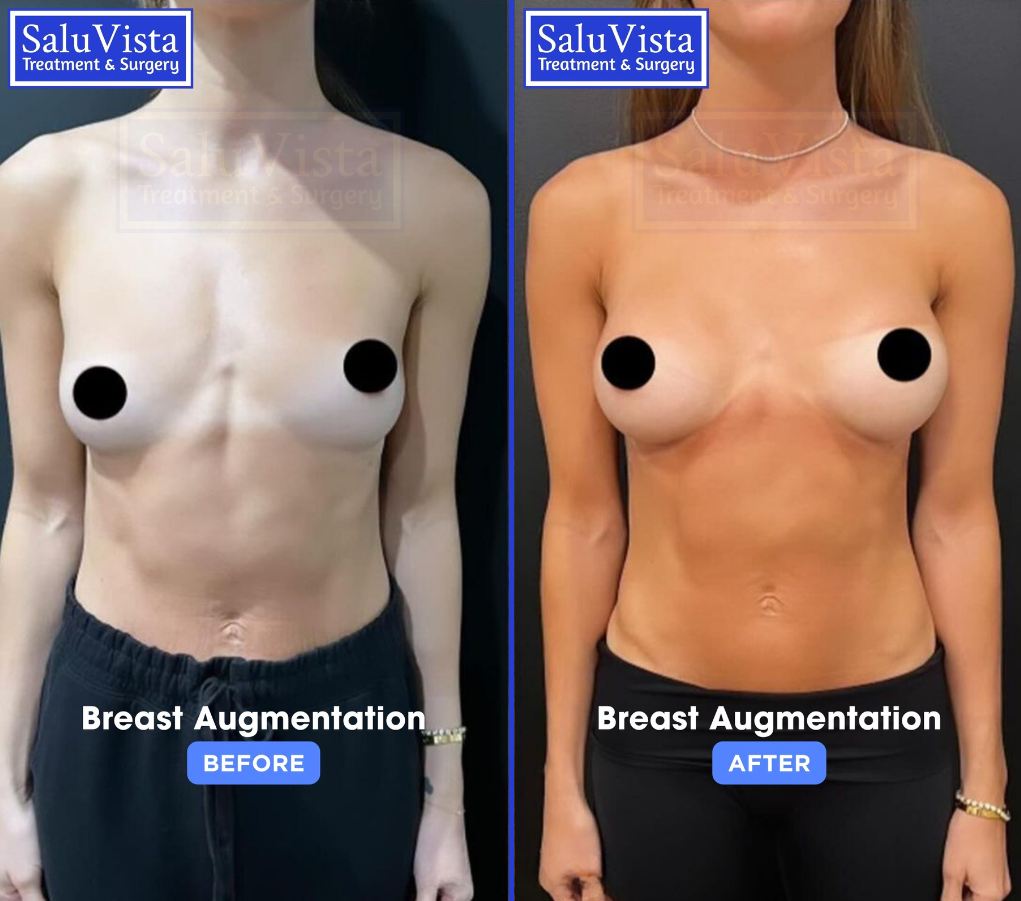
Two people can be delighted at the same cc and unhappy at the same cc. That's because shape, projection and proportion matter as much as volume. Judge the mirror, not the measurement.
Sometimes the most skilled advice is "a little less." A surgeon who occasionally recommends a smaller implant (or, rarely, no surgery at all) is putting your safety and durability first.
Want a size recommendation built around your measurements?
Share a few details and your goals, and speak with your surgeon before you travel. You'll get an honest, personalised view, including if a smaller size, or none, would serve you better.
Get a free assessment →Cost and what a quote covers
At SaluVista, breast augmentation starts from £2,680 (≈ €3,160), with the implants themselves priced separately, because implant material, brand and size affect the figure. That's a guide only. Your real price comes as a transparent, itemised quote confirmed after an individual assessment, so you can see exactly what the surgery, implants, hospital stay and aftercare include before you commit. Size, incidentally, doesn't dramatically change the surgical fee: a bigger implant costs a little more, but you should never pick a size to chase a price; if your plan also involves lifting the breast, our reduction and uplift guide explains how that changes things, and the wider plastic surgery hub covers costs across procedures.
Wherever you have surgery, choose the surgeon and safety standards first and the price second; UK guidance from the NHS on cosmetic procedures and the professional standards of the British Association of Aesthetic Plastic Surgeons (BAAPS) are sensible reading before any decision.
Frequently asked questions
How do surgeons decide what breast implant size is right for me?
Surgeons start with your body, not a cup size. They measure the width of your natural breast base, assess how much skin and breast tissue you have and its quality, and consider your height, shoulders and chest width. They then match implant volume, base width and profile to those measurements and to your goals, so the result fits your frame and your tissue can support it safely.
Does implant volume in cc equal a bra cup size?
No. Implants are measured in cubic centimetres (cc) of volume, not cup sizes. The same cc will look different on different chest widths, and cup sizing varies between bra brands. As a very rough guide, many people associate roughly 130 to 200cc with about one cup size increase, but this changes with your frame, existing tissue and implant profile, so cc is a far more reliable measure than a target cup.
What is implant profile and why does it matter for size?
Profile describes how far an implant projects forward for a given base width. For the same volume, a higher-profile implant is narrower and projects more, while a lower-profile implant is wider and flatter. Profile lets a surgeon fit the right volume onto your specific chest width, so two people with the same cc can get very different shapes depending on which profile suits their frame.
Can I just choose the biggest implant I can get?
Not safely. Implants that are too large for your tissue and frame place more strain on the skin and can raise the risk of sagging over time, thinning tissue, visible rippling, discomfort and the need for revision surgery. A responsible surgeon may advise a smaller size than you first ask for, or occasionally advise against surgery, because the goal is a result that lasts and stays healthy, not simply the largest possible.
How can I picture my result before surgery?
Useful tools include trying sizers in a firm bra, looking at photographs of people with a similar frame and starting tissue, and discussing measurements with your surgeon. Some clinics offer 3D imaging, which can help but is a simulation, not a promise. Bring reference photos of looks you like and dislike so your surgeon understands your goal in real terms rather than a number.
Will my chosen size still look right in ten years?
Breasts change with age, weight, pregnancy and gravity, and no size freezes that. Choosing a volume your tissue can comfortably support gives the best chance of an appearance that ages well. Very large implants relative to your frame tend to show the effects of gravity sooner. Your surgeon can talk you through how a given size is likely to behave over time for your body.
This article is general information, not medical advice, and does not replace a consultation with a qualified surgeon. Individual results and recommendations vary, and no specific aesthetic outcome can be guaranteed. Always discuss your options and risks with a medical professional; a qualified human surgeon makes the final decision.