"Turkey teeth": the honest truth
Quick answer
"Turkey teeth" is a viral UK nickname. It means a full set of very white crowns (sometimes veneers), in Turkey. It isn't a real procedure. The concern behind the term is over-filing healthy teeth to fit crowns quickly, which is irreversible, and done conservatively by a qualified dentist, crowns and veneers can be safe and high quality.
- Crowns cover the whole tooth and remove more of it; veneers are thin shells that remove less.
- The real risk is aggressive tooth reduction, not the country.
- The safeguard is a qualified dentist, proper assessment and a conservative plan.
In this guide
Not many dental topics blow up the way "Turkey teeth" has. Type it into a search bar and you get two extremes stacked side by side: dazzling before-and-afters, and grim warnings from people who wish they'd never gone near it. No wonder so many people can't tell whether a smile makeover in Turkey is a smart move or a mistake waiting to happen, and the honest answer is that it comes down to how the work is done. Below we set out what the term actually means, where the real risk sits, and what a careful clinic does differently.
Treat this as background to help you ask sharper questions at your consultation. It isn't medical advice.
What "Turkey teeth" actually means
No dentist has "Turkey teeth" on their price list. It's a social-media label, nothing more, for that very white, very even row of upper teeth (usually the lower set too) that comes from fitting a full row of crowns, occasionally veneers, most often in Turkey. The look caught on and the nickname stuck to it. The trouble is that the phrase throws careful work and rushed work into the same bucket, so on its own it tells you nothing about quality, and three things actually matter: the type of restoration, how much natural tooth gets removed, and who is holding the drill.
Crowns vs veneers
People use the two words interchangeably, but they aren't the same thing:
| Veneer | Crown | |
|---|---|---|
| What it is | Thin shell on the front of the tooth | Cap covering the whole tooth |
| Tooth removed | Relatively little | More — the tooth is reshaped all round |
| Best for | Mainly cosmetic changes to visible surfaces | Larger changes, damaged or weak teeth |
| Invasiveness | Lower | Higher |
| Reversible | Largely no — enamel is removed | No |
Neither one wins in the abstract. The right call depends on the state of your teeth and what you're trying to change, and for more detail, see our guides on veneers in Turkey and the wider dental treatment hub.
The over-filing risk, honestly
This is what the warnings are really pointing at. Fitting a crown means shaping the tooth down first. Done conservatively, only what's necessary comes off. Done badly, or rushed to squeeze a full makeover into a couple of days, too much healthy tooth gets filed away, and that's irreversible: it can get close to or affect the nerve, and it may lead to sensitivity or the need for further treatment later.
Here's the part worth underlining: this is a risk of rushed or inappropriate dentistry, not of Turkey, and the same harm can happen in any country when someone removes more tooth than needed. What protects you is conservative planning and an experienced dentist. That holds wherever you happen to be.
A good dentist takes off as little natural tooth as possible and steers you toward the least invasive option that meets your goals. Be wary of anyone promising a whole new smile in 48 hours with no proper assessment first.
How it's done responsibly
A responsible smile makeover follows the same handful of principles, wherever you are:
- Proper assessment first — X-rays, oral-health checks and a discussion of what you actually want, before any drilling.
- Conservative technique — choosing veneers over crowns where suitable, and removing the minimum tooth structure needed.
- A written plan — how many teeth, which restoration, which materials, and a warranty in writing.
- Realistic timing — not compressing complex work into an impossibly short trip.
- Clear aftercare — who to contact, and what happens if there's a problem back home.
What it costs
Cost is one of the main reasons people look to Turkey in the first place, and the saving is genuine rather than a trick, coming from lower running costs, not lower standards. At SaluVista, transparent guide prices start from around £190 / $255 per zirconium crown and £320 / $430 per veneer, with a full smile plan quoted after assessment, and you should treat every figure as a starting point, since your itemised quote is confirmed only once a dentist has reviewed your case. For the full picture, see dental treatment in Turkey vs the UK.
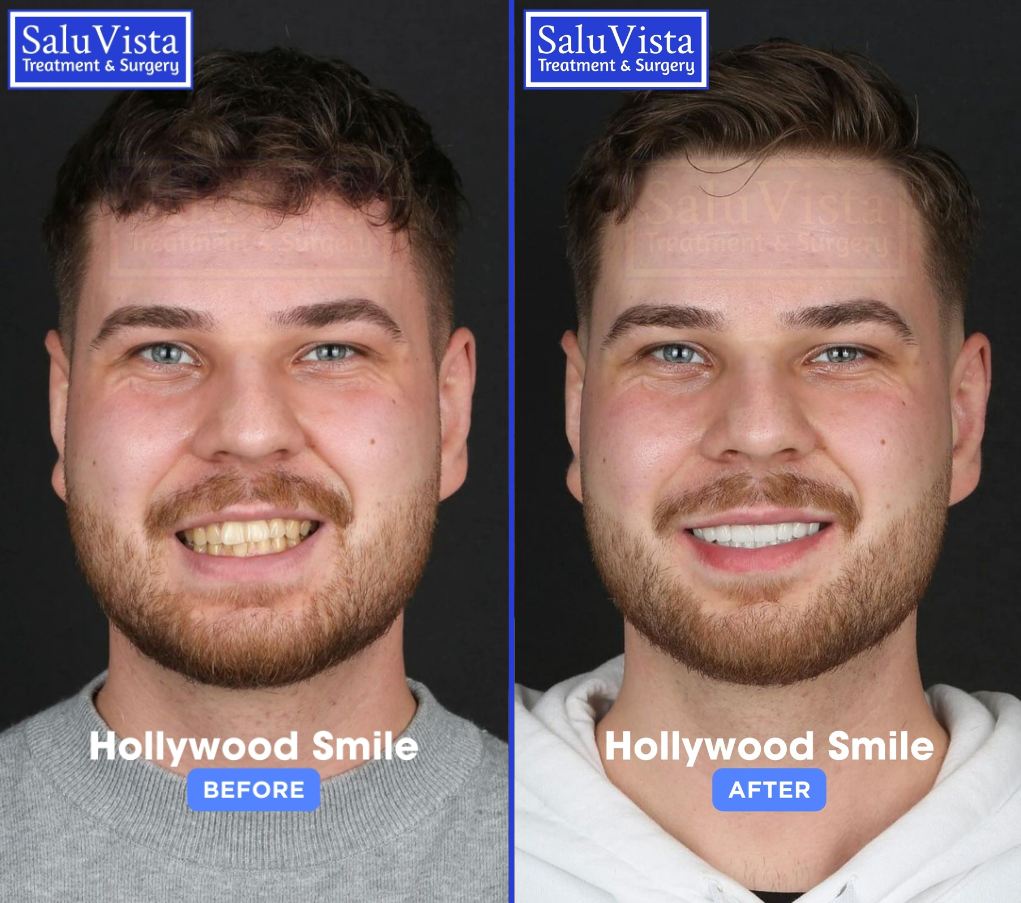
Considering a smile makeover?
Send a few photos and tell us what you'd change, and you'll get an honest opinion back, including the most conservative option that fits your goals.
Get a free assessment →Deciding well
- Ask about tooth removal. A trustworthy dentist will tell you how much natural tooth is coming off and why.
- Prefer the least invasive option that achieves your goal. Sometimes that's whitening or a few veneers, not a full set of crowns.
- Get it in writing: the plan, the materials, the warranty. Never decide under pressure or on price alone.