Plastic surgery
Rhinoplasty in Turkey: cost & complete guide (2026)
Medically reviewed by Dr. Mehmet Yılmaz
Quick answer
Rhinoplasty (nose reshaping) in Turkey starts from £3,045 / $4,100 (about €3,600) at SaluVista as an all-inclusive guide price, with revision rhinoplasty from £3,990 / $5,370. That figure is a starting point, not a flat fee. Your final cost is confirmed in a transparent, itemised quote after an individual assessment, because it depends on your nose, whether breathing work is needed and your surgeon's plan.
- From £3,045 / $4,100 guide price, all-inclusive of surgeon, anaesthesia, hospital stay, tests and transfers.
- Can address both breathing and appearance, functional and aesthetic goals in one operation.
- Plan for roughly 7–10 days in Istanbul; swelling settles over weeks to months.
- A board-certified plastic surgeon makes the final decision, and may advise a smaller change, or none.
In this guide
Few operations get requested as often as rhinoplasty, and few are as unforgiving to perform, because the nose sits dead centre of your face, and unlike most cosmetic targets it has a day job: moving air. That combination is what makes it difficult. Below we walk through what nose reshaping in Turkey actually costs, what a package includes, who tends to make a good candidate, and how a single operation can change both how you look and how you breathe. It sits under our plastic surgery hub.
Treat it as background for a proper consultation, not as medical advice.
How much rhinoplasty costs in Turkey
At SaluVista, rhinoplasty starts from £3,045 / $4,100 (about €3,600), and revision rhinoplasty from £3,990 / $5,370 (≈ €4,700), and you should read those as "from" prices, because that's exactly what they are: a floor, not the figure everyone ends up paying. What you actually pay gets settled once a surgeon has looked at your nose, agreed a plan, and put it in writing as a transparent, itemised quote.
A handful of things push the number up or down:
- Complexity of your nose — a subtle refinement is different work from rebuilding a nose with thick skin, a prominent hump or asymmetry.
- Function as well as form — if a deviated septum needs correcting for breathing (septorhinoplasty), that adds surgical steps.
- Primary vs revision — operating on a nose that has been through previous surgery is harder and priced accordingly, which is why revision starts higher.
- Cartilage grafting — some noses need cartilage (often from the septum) to support or reshape the tip.
A responsible clinic never quotes a final rhinoplasty price from a photo alone. If someone gives you an exact figure before assessing your nose and your breathing, treat that as a warning sign, not a bargain.
What the rhinoplasty package covers
The whole point of a SaluVista package is that the price you agree is the price you pay once you land. A typical one covers:
- The surgeon's fee and the operating theatre.
- General anaesthesia and the anaesthetist.
- Your hospital or clinic stay around the operation.
- Standard pre-operative tests and health checks.
- Your post-operative splint, dressings and medications.
- Airport and clinic transfers in Istanbul.
- Coordination and aftercare — including your follow-up review before you fly home.
Flights you'll normally book yourself, and extra hotel nights beyond the included stay are easy to bolt on, though whatever the final list looks like, it's all itemised on your quote before you commit to anything. Screening and booking run through the SaluVista app. You'll speak with your surgeon before travelling.
Turkey vs UK cost — why the difference
Go private in the UK and you'll usually pay several times what a comparable package costs in Turkey, and that gap is mostly about local economics: staff wages, facility costs, overheads, the exchange rate. It isn't a sign that corners get cut on the clinical side, because the things that shouldn't shift from one country to the next are a board-certified plastic surgeon, an accredited hospital, honest assessment, and structured aftercare.
| SaluVista (Turkey) | UK private (typical) | |
|---|---|---|
| Primary rhinoplasty | From £3,045 / $4,100 (≈ €3,600) | Often markedly higher |
| Revision rhinoplasty | From £3,990 / $5,370 (≈ €4,700) | Higher still |
| What's included | Surgeon, anaesthesia, hospital, tests, transfers, aftercare | Varies — often itemised as extras |
| Travel & stay | Transfers included; ~7–10 days in Istanbul | Local, minimal travel |
Price matters, but it makes a poor headline. The question that actually decides your result is whether the surgeon and the plan fit your nose, and our guide to revision rhinoplasty in Turkey makes the case that getting it right the first time is, in the end, the cheapest route of all.
Are you a candidate for rhinoplasty?
The people who do best tend to be in good health. They can point to one specific thing that bothers them, with realistic expectations. Surgery can soften a hump, reshape a bulbous or drooping tip, narrow a wide nose, straighten a crooked bridge, or bring the nose into better balance with the rest of the face, and it can open up your breathing at the same time. What it can't do is hand you someone else's nose or promise a flawless, permanent result, because your own anatomy, above all your skin thickness and cartilage, draws the line on what's possible.
You may not be ready if…
- You're still growing — surgeons usually wait until facial growth is complete (commonly late teens).
- You're seeking surgery under pressure, or to please someone else.
- Your expectations are for perfection rather than improvement.
- A health condition or medication makes surgery riskier right now.
A nose has to look right and still let you breathe, so I examine both at the same visit rather than treating them as separate conversations. The patients who are happiest a year later are usually the ones I advised toward a smaller change, not a bigger one.Dr. Mehmet Yılmaz, Plastic Surgery
Rhinoplasty and facial-aesthetic work at SaluVista is led by Assoc. Prof. Emre G., an academic plastic surgeon whose focus includes facial aesthetics and rhinoplasty, and you'll talk to your surgeon before you travel, since a qualified human, not an algorithm, makes the final decision.
Breathing and aesthetics — one operation, two goals
The nose isn't only a feature you catch in the mirror. It's an airway too. Plenty of people who dislike its shape also can't breathe well through it, and the usual culprit is a deviated septum, the wall between the nostrils sitting off to one side. That's where rhinoplasty comes in: looks and function, sorted out together.
Aesthetic rhinoplasty
This reshapes the outside of the nose, the bridge, tip, nostrils and overall proportion, so it sits in better balance with the rest of your face, and small changes here read as big visual differences, which is precisely why the work has to be exact.
Functional rhinoplasty & septoplasty
This is the airflow side of things. Straighten the septum during the same operation that reshapes the nose and the combined procedure is usually called septorhinoplasty, doing both at once for one anaesthetic, one recovery, and a nose that looks and works better. A good surgeon treats your breathing and your appearance as one question rather than two, and tells you plainly what your anatomy will and won't allow, which is exactly why the NHS overview of nose reshaping (rhinoplasty) is a solid, jargon-free place to start.
The procedure, step by step
- Assessment & plan. Your surgeon examines the nose inside and out, discusses your goals, checks your breathing and agrees a realistic plan.
- Anaesthesia. Rhinoplasty is usually done under general anaesthetic.
- Reshaping. Through incisions hidden inside the nostrils (closed) or with one small external incision on the columella (open), the surgeon adjusts bone and cartilage, sometimes using cartilage grafts to support the tip or bridge.
- Support. A splint is applied to protect and hold the new shape; internal splints or soft packing are sometimes used briefly.
- Review & splint removal. After about a week the surgeon reviews you and removes the external splint before you travel home.
Whether the open or closed approach suits you comes down to your anatomy and what needs changing; our guide to open vs closed rhinoplasty weighs the two up properly. The operation usually runs a few hours. Most rhinoplasty is done as a short hospital stay.
Recovery at a glance
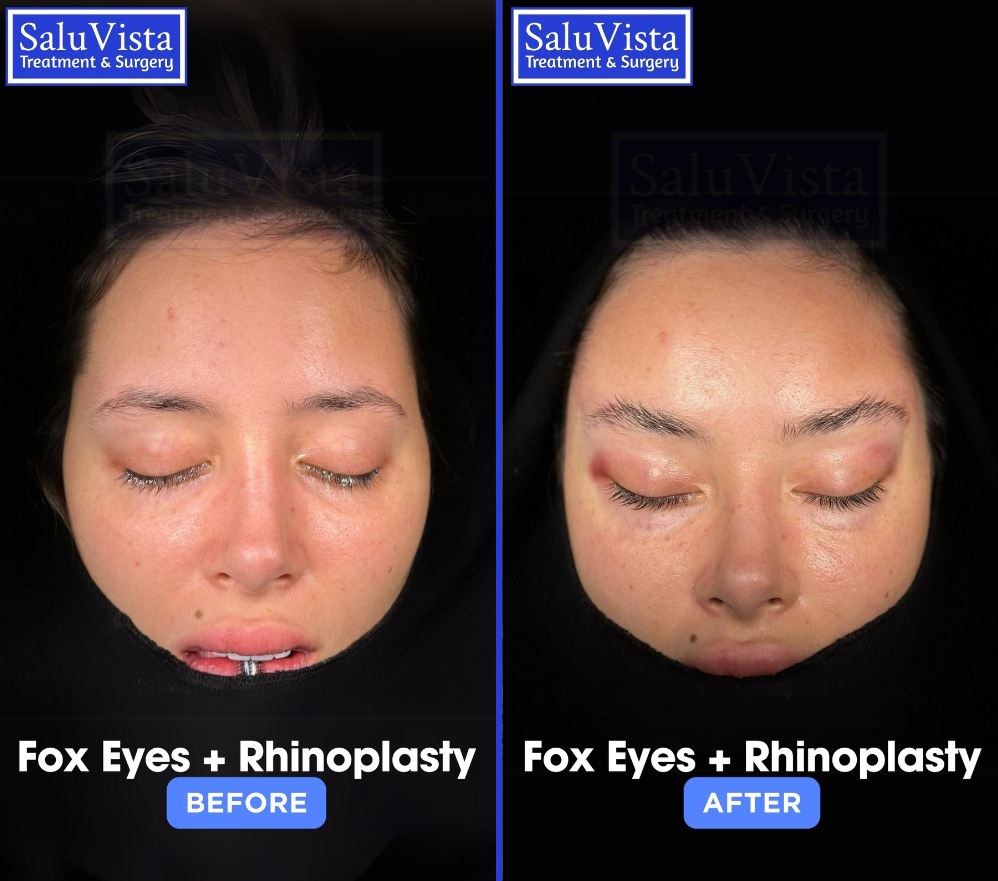
The first week is the one people notice: a splint, some bruising around the eyes, swelling that peaks within the first few days, though by the two-week mark most people feel presentable again. The part nobody warns you about upfront is that rhinoplasty rewards patience. The fine detail of the tip settles slowly, and subtle refinement can carry on for up to a year as the last of the swelling clears, and that's the normal course of things, not a complication.
Realistic timeline: splint off at ~1 week · bruising fades over ~2 weeks · most swelling settles over weeks to months · final refinement up to ~12 months.
For the full week-by-week version, what to expect, what actually helps, and when something warrants a call, our rhinoplasty recovery timeline has it.
Wondering what's realistic for your nose?
Share a few details and your goals, and a specialist gives you an honest, personalised view, including whether a smaller change, or no surgery, would serve you better.
Get a free assessment →Choosing safely
Rhinoplasty rewards care and punishes shortcuts. Wherever you end up booking, look for:
- A board-certified plastic surgeon who reshapes noses regularly.
- An accredited hospital and a proper anaesthetic team.
- Honest assessment — a surgeon willing to say no, or to suggest less.
- Structured aftercare and a clear plan if you ever needed revision.
- A transparent, itemised quote — never a mystery lump sum.
Independent bodies like the British Association of Aesthetic Plastic Surgeons (BAAPS) put out genuinely useful guidance on picking a surgeon and knowing what to ask, and it's worth reading whichever country you're weighing up. Safety before convenience, every time.
Frequently asked questions
How much does rhinoplasty cost in Turkey?
At SaluVista, rhinoplasty starts from £3,045 / $4,100 (about €3,600) as an all-inclusive guide price, with revision rhinoplasty from £3,990 / $5,370. That is a starting point, not a flat fee: your final figure is confirmed in a transparent, itemised quote after an individual assessment, because it depends on the complexity of your nose, whether breathing work is needed, and your surgeon's plan.
What is included in a rhinoplasty package in Turkey?
A SaluVista rhinoplasty package typically covers the surgeon's fee, anaesthesia, the hospital or clinic stay, standard pre-operative tests, your post-operative splint and dressings, and airport and clinic transfers, along with coordination and aftercare support. Flights are usually arranged separately. Everything is set out in your itemised quote so there are no surprises.
Is cheap rhinoplasty in Turkey safe?
Price alone should never drive a rhinoplasty decision. Safety comes from a board-certified plastic surgeon, an accredited hospital, honest assessment and proper aftercare — not from the lowest quote. A responsible surgeon may recommend a smaller change, or advise against surgery entirely. At SaluVista you speak with your surgeon before travelling and a qualified human makes the final decision.
Can rhinoplasty improve my breathing as well as my appearance?
Yes. Functional rhinoplasty, often combined with septoplasty to straighten a deviated septum, aims to improve airflow, while aesthetic rhinoplasty reshapes the nose. Many people have both goals addressed in one operation. Your surgeon assesses your breathing and your aesthetic wishes together and explains what is realistically achievable.
How long do I need to stay in Turkey for rhinoplasty?
Most patients plan for roughly seven to ten days in Istanbul so the surgeon can review you and remove the splint before you fly home. Visible swelling and bruising settle over the following weeks, while subtle refinement of the tip can continue for up to a year. Your team confirms your exact stay based on your plan.
Does rhinoplasty leave a visible scar?
Closed rhinoplasty places all incisions inside the nostrils, leaving no external scar. Open rhinoplasty adds one small incision across the columella, the strip of skin between the nostrils, which usually fades to become barely noticeable. Your surgeon chooses the approach that best suits your anatomy and goals.
This article is general information, not medical advice, and does not replace a consultation with a qualified surgeon. Individual results and recommendations vary, and no specific aesthetic outcome can be guaranteed. Always discuss your options and risks with a medical professional.
Sources & further reading