Plastic surgery
Mini tummy tuck in Turkey: is the smaller op right for you?
Medically reviewed by Dr. Mehmet Yılmaz
Quick answer
A mini tummy tuck is a smaller abdominoplasty that tightens loose skin only below the navel, using a shorter scar and usually leaving the belly button untouched. It suits a small, low "pooch", not post-pregnancy laxity above the navel or a large muscle gap. At SaluVista in Istanbul a mini tummy tuck starts from £2,520. It's confirmed by an itemised quote after assessment.
- What it fixes: a small amount of loose skin low on the abdomen, below the belly button.
- Not a mini version of everything: it can't tighten skin above the navel or repair a full muscle separation.
- A shorter scar & quicker recovery than a full tummy tuck — but still a permanent scar.
- From £2,520 (≈ €2,975) — a guide price, confirmed after a surgeon assesses you.
In this guide
If your stomach is nearly where you want it but a small pad of loose skin sits stubbornly low, below the belly button, you may have come across the mini tummy tuck. It's the smallest member of the abdominoplasty family. For the right person, it's a neat, lower-impact operation. But it's easy to hope it will do more than it can. This guide from our plastic and aesthetic surgery team explains exactly what a mini tuck fixes, where its limits are, and how to tell whether it, or a full tummy tuck, is the honest answer for your body.
It's general information to help you prepare, not medical advice.
What a mini tummy tuck actually does
A mini tummy tuck, or mini abdominoplasty, removes a small amount of excess skin below the navel and re-drapes what remains through a shorter incision. Where a full tummy tuck reworks the whole front of the abdomen, a mini focuses on a single, confined problem: a low fold of loose skin that won't tighten with diet or exercise.
A confined skin tightening
The surgeon makes a short horizontal cut low on the abdomen, often only a little longer than a caesarean scar, removes the loose skin beneath the belly button, and pulls the remaining skin down snug. Because the work stays below the navel, the belly button itself usually doesn't need to be moved or cut around.
Sometimes with a little liposuction
A mini tuck is often paired with some liposuction. This refines the contour of the lower tummy and flanks. If your concern is really just fat with good skin tone, though, liposuction alone may be all you need: a good surgeon will say so rather than sell you an operation you don't require.
A mini tummy tuck is a small, targeted operation, not a shrunken version of a full one. It solves a low, limited problem, and asking it to do more only disappoints.
Mini vs full tummy tuck: the real difference
This is the decision that matters most. Getting it wrong is the commonest source of disappointment. The two operations are not "small" and "large" versions of the same thing: they address different amounts and locations of loose skin, and one repairs muscle while the other barely can.
A full tummy tuck removes skin both above and below the navel, repositions the belly button, and can stitch separated abdominal muscles back together up the whole midline, the repair that post-pregnancy tummies usually need. A mini does none of the upper-abdomen work. It tightens only the strip below the navel and can reach, at most, a small low muscle separation.
Put simply: if you can pinch loose skin above your belly button, or a pregnancy has left a visible bulge that stays even when you're slim, a mini won't fix it, and a surgeon should tell you so plainly. If your looseness circles the waist after larger weight loss, an extended tummy tuck or belt lipectomy is the better conversation.
Side-by-side comparison
| Mini tummy tuck | Full tummy tuck | |
|---|---|---|
| Skin removed | Below the navel only | Above & below the navel |
| Belly button | Usually left in place | Repositioned (small extra scar) |
| Muscle repair | Limited, low only | Full midline repair possible |
| Scar length | Shorter | Longer (hip to hip) |
| Best for | Small, low skin pooch | Post-pregnancy laxity / muscle gap |
| Recovery | Quicker | Longer |
| Guide price (from) | £2,520 | £3,675 |
If you're still weighing surgery against a non-surgical route, our tummy tuck vs liposuction guide untangles which problem each one actually solves.
Who a mini tummy tuck suits — and who it doesn't
A mini gives its best and safest result for a fairly specific person. You're likely a candidate if you are:
- at a stable, healthy weight: a mini refines a body close to its goal, it doesn't replace weight loss;
- bothered by only a small amount of loose skin low on the abdomen, below the navel;
- free of significant muscle separation above the belly button;
- a non-smoker, or willing to stop well before and after surgery, because smoking badly impairs wound healing;
- in good general health, with realistic expectations about scars and recovery.
When a mini is the wrong operation. If you have loose skin above the navel, a stretched muscle wall after pregnancy, or a larger apron of skin after major weight loss, a mini tummy tuck will under-treat you, and you'll be paying for a result that can't match your goal. A responsible surgeon will steer you to a full tuck, an extended tuck, or advise waiting, since being told you need more (or that now isn't the time) is good care, not a lost sale.
Your plastic surgeon makes that call after examining you. For body procedures at SaluVista that is Op. Dr. Caner K., a board-certified plastic, reconstructive and aesthetic surgeon; you speak with your surgeon before you travel, and a qualified human, not an algorithm, signs off on your plan.
Scar & belly button
A mini tummy tuck still leaves a permanent scar. Removing skin always does. The upside is that the scar is usually shorter than a full tummy tuck's, running low across the lower abdomen and positioned so underwear or swimwear can generally cover it. Because the belly button is usually left where it is, there's normally no scar around the navel. That's one of the mini's genuine advantages.
The scar is raised and pink at first and fades over roughly a year to a paler, flatter line, though it never disappears entirely. How it matures depends partly on your skin and genetics, which no surgeon can fully control; anyone promising a "scarless" tummy tuck of any size is not being straight with you.
You're trading a short scar you can usually hide for a flatter lower tummy. For the right person that's a fair trade. But only you can decide if it's worth it for you.
Recovery, step by step
Because a mini disturbs less tissue than a full tummy tuck, recovery is generally quicker, but it's still surgery, and it's still staged over weeks to months.
First days
You may go home the same day or after a short stay. Some tightness and discomfort low on the abdomen are normal and managed with medication, while you're encouraged to walk gently early to support healing and may stand slightly bent forward at first.
Weeks one to six
You wear a compression garment to support the area and manage swelling. Many people take about one to two weeks off a desk job, often less time than after a full tuck, and longer for physical work; heavy lifting and strenuous exercise are best avoided for around four to six weeks, following your surgeon's guidance.
Months
Swelling settles gradually and the final contour appears over several months as tissues soften and the scar matures; the tummy you see at three weeks is not the tummy you'll have at three months. Throughout, SaluVista keeps you connected to your care team for follow-up.
Cost of a mini tummy tuck in Turkey
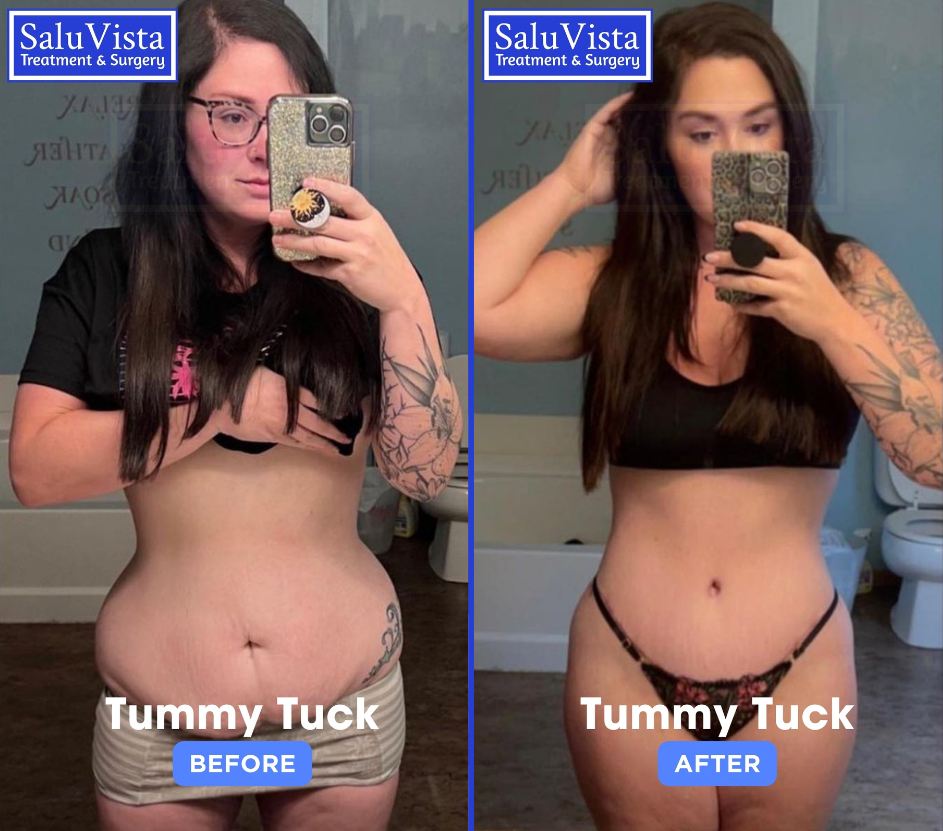
Turkey is a leading destination for body-contouring surgery because it pairs experienced, board-certified plastic surgeons with prices well below UK private rates. At SaluVista, our transparent guide "from" prices are:
- Mini tummy tuck — from £2,520 (≈ €2,975)
- Full tummy tuck — from £3,675
- Extended tummy tuck — from £4,200
- Liposuction (single area, sometimes added for contour) — from £2,205
These are guide prices only. Your final figure is confirmed in a transparent, itemised quote after an individual assessment, because the amount of skin removed, whether liposuction is added, and your anatomy all change the total. We won't quote you a flat number before a surgeon has seen your case. That would be guessing. For how body-surgery pricing is built up component by component, the liposuction cost guide is a useful companion.
Not sure if a mini is enough — or too little?
Share a few details and photos securely, and Op. Dr. Caner K. gives you an honest, personalised recommendation, including whether a full tummy tuck, liposuction alone, or simply waiting would serve you better.
Get a free assessment →Safety & honest expectations
A mini tummy tuck is lower-impact than a full one, but it is still an operation with real risks, and its results are modest by design. The most important safeguard is choosing it for the right reason: a small, low skin problem. Choosing a mini because it's cheaper or has a shorter recovery, when your body actually needs a full tuck, is a false economy: you'll pay again to correct it.
The UK's NHS guide to cosmetic procedures and the British Association of Aesthetic Plastic Surgeons (BAAPS) both stress choosing a properly qualified surgeon and understanding the risks and realistic limits before you commit. That's advice we wholeheartedly echo.
How SaluVista works. Screening and booking happen in the app; you speak with your surgeon before travelling; and a qualified human makes the final decision on whether (and how) to operate. No pressure, no rushing, and a smaller change (or none at all) is always on the table.
Frequently asked questions
How much does a mini tummy tuck cost in Turkey?
At SaluVista a mini tummy tuck starts from £2,520 (about €2,975), compared with a full tummy tuck from £3,675. This is a guide 'from' price; your exact cost is confirmed in a transparent, itemised quote after an individual assessment, because the amount of skin removed, whether any liposuction is added, and your anatomy all affect the final figure.
What is the difference between a mini and a full tummy tuck?
A mini tummy tuck only tightens loose skin below the navel, uses a shorter scar and usually leaves the belly button untouched. A full tummy tuck also removes skin above the navel, repositions the belly button and can repair separated muscles up the whole midline. A mini suits a small, low pooch; a full suits post-pregnancy laxity or a muscle gap.
Am I a good candidate for a mini tummy tuck?
A mini tummy tuck suits people at a stable, healthy weight with only a small amount of loose skin low on the abdomen, below the navel, and little or no muscle separation. If you have skin laxity above the navel or a significant muscle gap after pregnancy, a full tummy tuck is usually the honest answer. A surgeon decides after examining you.
How long is recovery after a mini tummy tuck?
Recovery is quicker than a full tummy tuck because less tissue is disturbed. Most people take about one to two weeks off a desk job, wear a compression garment, and avoid heavy lifting and strenuous exercise for around four to six weeks. Swelling settles gradually over weeks to months, with the final contour visible after several months.
Will a mini tummy tuck leave a scar?
Yes. A mini tummy tuck leaves a permanent horizontal scar low across the lower abdomen, but it is usually shorter than a full tummy tuck scar and placed so underwear or swimwear can cover it. Because the belly button is generally not moved, there is no scar around the navel. The scar fades over roughly a year but never disappears.
Can a mini tummy tuck fix separated stomach muscles?
Only to a limited degree. A mini tummy tuck can repair a small muscle separation low on the abdomen, but it cannot reach the full length of the midline. If pregnancy has left a significant gap between the vertical muscles (diastasis recti), a full tummy tuck is needed to repair it properly. A surgeon assesses your muscle wall before advising.
This article is general information, not medical advice, and does not replace a consultation with a qualified surgeon. Individual results, risks and recommendations vary, and no specific aesthetic outcome can be guaranteed. Always discuss your options and risks with a medical professional.
Sources & further reading