Plastic surgery
Gummy bear (cohesive) implants in Turkey
Medically reviewed by Dr. Mehmet Yılmaz
Quick answer
Gummy bear implants are breast implants filled with a highly cohesive, form-stable silicone gel that holds its shape and stays together even if the shell is cut, like a gummy sweet. Compared with traditional softer-gel implants, they resist rippling and keep a stable, often teardrop contour, but feel slightly firmer and cost more.
- The gel is form-stable: it keeps its shape and stays contained if the shell is damaged.
- They come in round or anatomical (teardrop) shapes and resist rippling and folding.
- Trade-offs: a slightly firmer feel, a longer incision, and a higher implant cost.
- Not automatically "better" — the right implant depends on your tissue, chest shape and goals, decided with a surgeon.
In this guide
"Gummy bear" is a nickname, not a brand. It describes breast implants filled with a highly cohesive, form-stable silicone gel: a gel cross-linked firmly enough that, if you sliced the implant in half, the gel would hold together and keep its shape rather than ooze out. That single property drives most of the differences you'll read about below. This guide explains what that means in practice, weighs the genuine pros and cons against traditional implants, and helps you understand whether a form-stable implant is likely to suit you.
It's general information to help you prepare for a conversation with a surgeon. It's not medical advice, and not a recommendation for any one implant.
What "gummy bear" actually means
All modern silicone implants contain a gel. What differs is how cohesive (how cross-linked and self-holding) that gel is. Softer, less cross-linked gels move and jiggle freely, which many people find very natural. A "gummy bear" implant sits at the firmer, more cohesive end: the gel behaves as a stable mass, so the implant keeps a defined contour and stays intact if the shell is breached.
Round vs anatomical
Form-stable implants come in two broad shapes. Round implants give fullness across the whole breast, including the upper pole. Anatomical (teardrop) implants concentrate volume lower down for a sloped, more natural-looking profile, and because the gel is form-stable, that teardrop shape is held rather than collapsing; anatomical implants have a textured shell and must not rotate in the pocket, which is one reason precise placement matters.
"Gummy bear" is descriptive shorthand for a highly cohesive, form-stable gel. It is not a specific manufacturer or a guarantee of a particular result.
Gummy bear vs traditional implants
| Gummy bear (form-stable) | Traditional silicone | |
|---|---|---|
| Gel | Highly cohesive, holds its shape | Softer, more freely mobile |
| Feel | Slightly firmer, defined | Softer, more natural jiggle |
| Shape retention | Strong — resists folding & rippling | Good, but more prone to rippling in thin tissue |
| If shell ruptures | Gel tends to stay contained | Gel can migrate more readily |
| Shapes | Round or anatomical (teardrop) | Usually round |
| Incision | Slightly longer (firmer gel) | Can be shorter |
| Cost | Typically higher | Typically lower |
For a wider view of every option: saline, round smooth, textured and form-stable, see our guide to breast implant types in Turkey.
Pros and cons, honestly
Where gummy bear implants shine
- Shape stability. The cohesive gel resists rippling, folding and wrinkling, which is valuable for people with thinner breast tissue.
- Contour control. Anatomical versions hold a teardrop shape, useful when a natural sloped profile is the goal.
- Rupture behaviour. If the shell is damaged, the firm gel is designed to stay together rather than spread.
The honest trade-offs
- Firmer feel. More cohesion means less of the soft "jiggle" some people specifically want.
- Longer incision. A firmer implant is harder to fold through a small opening, so the scar can be slightly longer.
- Rotation risk (anatomical). A teardrop implant that rotates in its pocket can distort the shape and may need correction.
- Higher cost. Form-stable implants usually carry a higher device price than traditional gel.
No implant is lifelong, and none is risk-free. A good surgeon will sometimes recommend a traditional implant, a smaller size, or no surgery at all — the goal is the right decision for you, not the most expensive one.
Understanding how any implant behaves over the years matters just as much as the first result. Our guide to breast implant safety and longevity covers rupture, capsular contracture and when revision is typically considered.
Who is a good candidate
Form-stable implants tend to suit healthy adults who want a stable, defined shape and, in particular, those with thinner tissue who are more prone to visible rippling with softer gels. They're also chosen when a controlled teardrop contour is the aim. That said, candidacy is about the whole picture:
- You're in good general health and a realistic non-smoker or willing to stop around surgery.
- Your breast and chest-wall anatomy suit the implant shape and pocket being considered.
- Your expectations are realistic — you want improvement, not a guaranteed exact outcome.
- You understand implants may need future revision and are not a one-time, permanent fix.
At SaluVista, your breast surgery is led by a board-certified plastic surgeon, Op. Dr. Caner K., whose aesthetic eye spans facial and body work, and you speak with your surgeon before travelling; screening and booking happen in the app, and a qualified human makes the final decision on whether (and how) to proceed. If you're still comparing the operation itself, start with our breast augmentation in Turkey guide.
The procedure & recovery
The operation is a standard breast augmentation performed under general anaesthetic. The surgeon creates a pocket, commonly under the muscle for better tissue cover, and places the implant through an incision usually sited in the breast crease. Because the cohesive gel is firmer, the incision may be a touch longer than for a softer implant, and precise pocket sizing is especially important for anatomical shapes so they sit correctly and don't rotate.
What recovery realistically looks like
Expect soreness, swelling and tightness in the first one to two weeks, easing as you return to light activity. Implants often sit high at first and settle over several weeks to a few months as swelling resolves and tissues relax, and the final shape is not the day-one shape. Most people avoid heavy lifting and vigorous exercise for several weeks and follow their surgeon's staged guidance. Realistic, patient expectations through this staged recovery are part of a good result.
Safety before convenience. Combining procedures or rushing the timeline to fit a short trip is never worth compromising your recovery. Proper screening beforehand and follow-up afterwards are non-negotiable.
Cost in Turkey
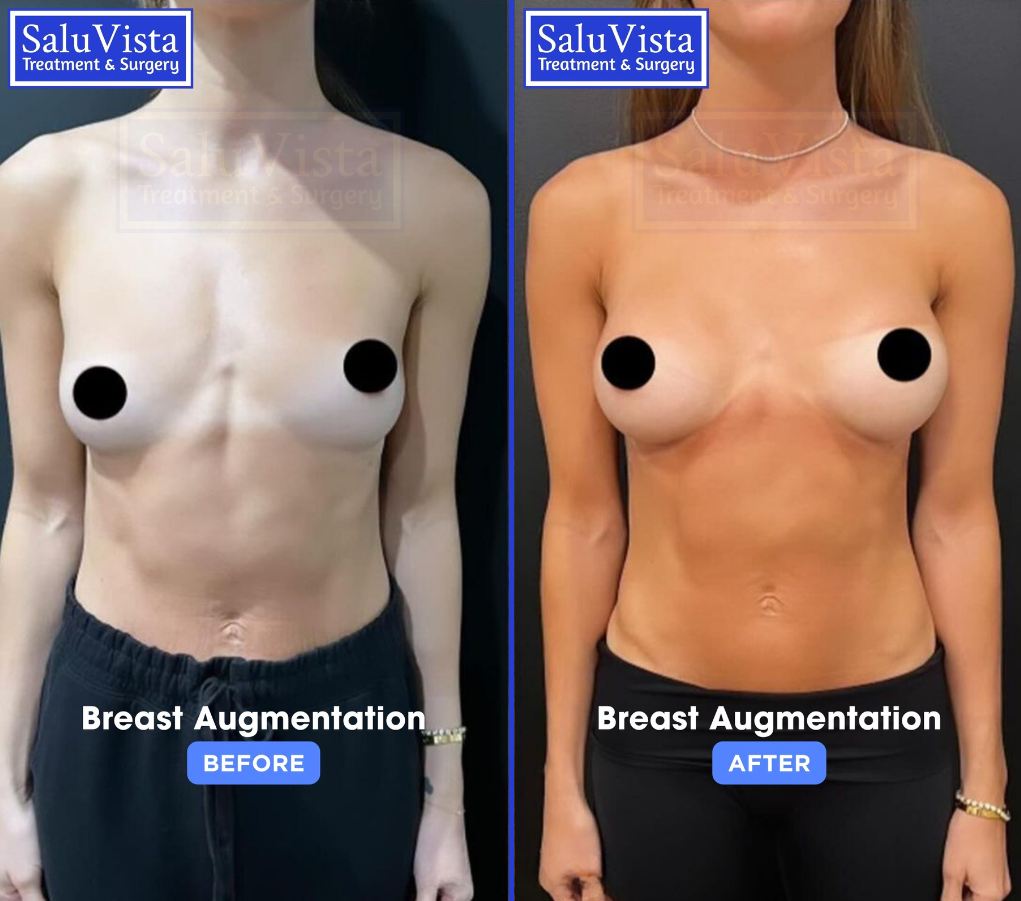
At SaluVista, breast augmentation starts from £2,680 (≈ €3,160), and the implant itself is charged as an extra cost, and that structure exists precisely because implants differ: a form-stable "gummy bear" device typically costs more than a traditional gel implant, and anatomical shapes can differ again. Quoting the surgery and the implant separately keeps the pricing transparent rather than hiding the device choice inside one flat number.
Every figure here is a "from" guide price only. Your actual, itemised quote is confirmed after an individual assessment that accounts for the specific implant type, size, your anatomy and your goals. For a full breakdown of how aesthetic pricing works, see our plastic surgery cost guide, and for the wider context of choosing Turkey, our plastic surgery hub.
Wondering if a form-stable implant suits you?
Share your goals and a few details, and a board-certified plastic surgeon gives you an honest, personalised view, including whether a traditional implant, a different size, or no surgery is the better call.
Get a free assessment →How to decide
- Get assessed. Your tissue thickness, chest shape and goals decide which implant type and shape are appropriate.
- Weigh feel against stability. If a soft, mobile feel matters most, a traditional implant may suit you better than a firmer cohesive gel.
- Think long term. Ask about revision, monitoring and how each option behaves over the years, not just the first result.
- Never decide on price or pressure. A responsible surgeon is happy to talk you out of surgery, or into a smaller change, when that's the right thing.
Frequently asked questions
What are gummy bear breast implants?
Gummy bear implants are breast implants filled with a highly cohesive, form-stable silicone gel. The gel holds its shape and stays together even if the shell is cut, much like a gummy sweet, rather than spreading like the softer gel in traditional implants. They can be round or anatomical (teardrop) and are designed to keep a stable, contoured shape over time.
What is the difference between gummy bear and traditional silicone implants?
The main difference is gel cohesivity. Traditional silicone implants use a softer, less cross-linked gel that feels very natural and moves freely. Gummy bear implants use a firmer, more cross-linked gel that holds its form, resists rippling and folding, and keeps its shape if the shell is damaged. Gummy bear implants tend to feel slightly firmer and hold a defined contour, while traditional gel feels softer and more mobile.
Do gummy bear implants feel natural?
Gummy bear implants feel firmer than traditional softer-gel implants because the gel is more cohesive. Many people still find them natural, especially when placed under the muscle with adequate tissue cover. Whether they feel natural to you depends on your own tissue, the implant chosen and placement, which is why an in-person assessment matters.
Who is a good candidate for gummy bear implants?
Good candidates are healthy adults seeking a stable, natural-looking shape, particularly those with thin breast tissue prone to rippling, or those wanting a controlled teardrop contour. Because form-stable implants require a slightly longer incision and precise pocket placement, a surgeon assesses your tissue, chest shape and goals to decide whether a gummy bear implant, a traditional implant, or no surgery is the right choice for you.
How much do gummy bear breast implants cost in Turkey?
At SaluVista, breast augmentation starts from £2,680, with the implant itself charged as an extra cost because form-stable and traditional implants differ in price. This is a guide only; your final, itemised quote is confirmed after an individual assessment that accounts for the specific implant type, size and your anatomy.
Are gummy bear implants safe?
Form-stable cohesive-gel implants are widely used and regulated, and the firm gel is designed to stay contained if the shell ruptures. However, no implant is lifelong or risk-free. Possible issues include capsular contracture, rotation of anatomical implants, and the need for future revision. A qualified surgeon reviews the risks with you before you decide.
How do I find out which implant suits me?
Start with an assessment of your anatomy and goals. Get the SaluVista app or message us for a free, honest review of your options with a board-certified plastic surgeon.
This article is general information, not medical advice, and does not replace a consultation with a qualified surgeon. Individual results and recommendations vary, and no specific aesthetic outcome can be guaranteed. Always discuss your options and risks with a medical professional.