Plastic surgery
Breast augmentation with fat transfer: a 2026 guide
Medically reviewed by Dr. Mehmet Yılmaz
Quick answer
Fat transfer breast augmentation enlarges the breasts using your own liposuctioned fat instead of an implant. It gives a modest, natural-feeling increase, usually up to about half a cup to a cup, and slims the donor area. But some fat reabsorbs, and a large size jump isn't possible. It suits people wanting a subtle change with enough spare fat; implants suit bigger increases.
- Your own fat, no implant: liposuction harvests fat, which is purified and injected into the breasts.
- Modest gain: often up to around a cup per session; some fat is naturally reabsorbed.
- Candidacy: you need enough donor fat and realistic, subtle goals, not a dramatic increase.
- Honest pricing: no invented flat figure. You get a transparent, itemised quote after assessment.
In this guide
Fat transfer breast augmentation, also called autologous fat grafting or a "natural boob job", enlarges the breasts using fat taken from your own body rather than a silicone implant. For the right person it's an appealing idea: a modest, natural boost and a slimmer waist or thighs in one go, with no manufactured device inside you. But it isn't a route to a dramatic increase, and honesty about what it can and can't do matters. This guide is part of our plastic surgery in Turkey hub. It's general information to help you prepare, not medical advice.
What fat transfer augmentation is
Fat transfer moves fat from an area where you have spare, such as the tummy, flanks, back or thighs, to the breasts, using the same core technique as a facial fat transfer and a Brazilian butt lift, just applied here to the breast. Because it uses your own living tissue, the result can feel and move very naturally, and there's no implant to choose, monitor or one day replace.
It is different from a breast uplift (mastopexy), which lifts sagging tissue, and different from implant surgery, which adds a fixed volume with a device. If your main concern is drooping rather than fullness, fat transfer alone won't lift a breast that has significantly descended. Read our breast uplift guide first.
At SaluVista, plastic and aesthetic surgery is led by two board-certified plastic surgeons. Body-contouring and fat-grafting work here is guided by Op. Dr. Caner K., whose practice covers reconstructive and aesthetic surgery with an aesthetic eye across both facial and body work. You speak with your surgeon before you travel, screening and booking happen in the app, and a qualified human makes the final decision on whether to proceed, and how.
How the procedure works
It's usually a single operation under general anaesthetic (sometimes sedation) with three stages:
- Harvest. Fat is gently removed by liposuction from your chosen donor area through small entry points, giving a contouring benefit there.
- Purify. The fat is processed to separate healthy fat cells from fluid and debris, so only good-quality tissue is used.
- Graft. The purified fat is injected in many fine layers across the breast. Layering matters: each parcel of fat needs to sit close to a blood supply to survive, which is why volume per session is limited.
The skill is in the grafting, not the harvesting. Injecting fat in fine, well-distributed layers, rather than large pockets, is what helps more of it survive. This is precise, technique-dependent work best done by an experienced plastic surgeon.
How much size you gain
This is the most important honest point. Fat transfer gives a modest increase, typically up to around half a cup to a cup per session, not a dramatic enlargement. There are two reasons. First, the grafted fat must establish a blood supply to survive, so only a limited amount can be added safely at once. Second, the body naturally reabsorbs some of the transferred fat in the first few months, so the final volume is less than what's injected and less predictable than an implant.
Because of this, some people choose a second session later to build further volume, and results vary between individuals. If you want a clear, reliable step up in size or more upper-pole fullness, implant-based augmentation is usually the better fit; compare the two in our breast augmentation overview and our guide to breast implant types.
Bigger is not the goal. Balance is. If your expectations point toward a large increase, a responsible surgeon will tell you fat transfer can't deliver it, rather than take you to theatre for a result you won't be happy with.
Fat transfer vs implants
| Fat transfer | Implants | |
|---|---|---|
| Material | Your own fat | Silicone/saline device |
| Size increase | Modest (often up to a cup) | Small to large, adjustable |
| Feel | Very natural | Natural to firm, depends on choice |
| Predictability | Some fat reabsorbs | High |
| Extra benefit | Slims the donor area | Upper-pole fullness & projection |
| Foreign device | None | Implant to monitor over time |
| Future maintenance | May need a top-up session | May need revision over years |
| Best for | Subtle, natural enhancement | Clear step up in size |
Some people combine approaches, for example a modest implant softened with a little fat for a more natural upper edge (a "hybrid" augmentation). Whether that's appropriate is an individual surgical decision, never a default.
Are you a candidate?
Fat transfer breast augmentation is generally considered for adults in good general health, with realistic expectations, who want a subtle, natural increase rather than a large one. Two things especially matter:
- Enough donor fat. You need a spare-fat area to harvest from. Very slim patients may not have sufficient volume for a worthwhile result. The surgeon assesses your donor sites at consultation.
- Stable weight and realistic goals. Because surviving fat behaves like the rest of your body fat, a stable weight helps keep results consistent.
You may be advised to wait if you're planning pregnancy soon, still breastfeeding, or your weight isn't yet stable, all of which change the breast and the result. You should also tell your surgeon about breast history and any family history of breast disease, so appropriate imaging and follow-up can be planned.
A good outcome starts with honesty. Some people are better served by a smaller goal, by implants, or by no surgery at all. Hearing that is a sign of good care, not a lost sale. The NHS notes that all cosmetic surgery carries risk and should be an informed, unpressured decision; it's worth reading the NHS cosmetic procedures pages before you commit.
If you're weighing safety specifically, see our honest look at whether plastic surgery in Turkey is safe.
Recovery & aftercare
Fat transfer means recovering in two areas at once: the breasts and the liposuction donor sites. Those donor sites are often the more uncomfortable part. Here's a realistic, staged picture; individual recovery varies:
- First few days: tenderness and swelling in the breasts, plus bruising and soreness at the donor sites. Pain is managed with medication.
- Week 1–2: most people return to desk work and light daily activity. A compression garment is usually worn over the liposuction area to help it settle.
- Weeks 4–6: heavy lifting and vigorous exercise are gradually reintroduced with your surgeon's clearance.
- Weeks to months: swelling settles and the amount of fat that has "taken" becomes clear once reabsorption stabilises, so don't judge the final volume early.
Some surgeons advise avoiding heavy pressure on the breasts early on, as excessive compression there can affect fat survival. Follow your own surgeon's specific aftercare. If you're travelling home, plan a safe interval before flying as advised.
Honest results & longevity
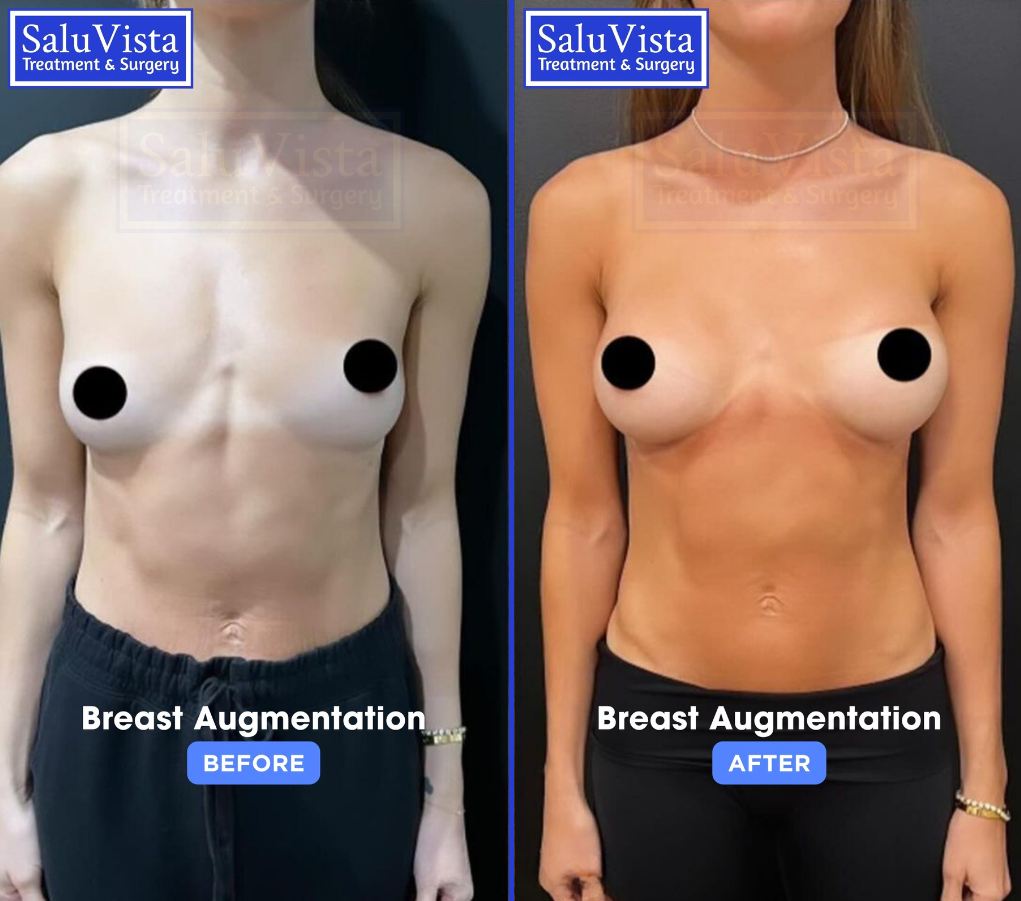
The fat that survives and establishes a blood supply is generally long-lasting, so results can be durable and, unlike an implant, there's no device to one day replace. But two honest caveats stand: some grafted fat is reabsorbed in the early months, and the surviving fat can grow or shrink with significant weight change, just like fat anywhere else on your body.
We won't guarantee a specific aesthetic outcome or a fixed final volume. No honest surgeon can. Plan for the possibility that a top-up session may be wanted, and attend any recommended imaging and follow-up, since professional bodies such as the British Association of Aesthetic Plastic Surgeons (BAAPS) publish patient guidance on breast procedures and fat grafting worth reading alongside this page.
Cost & how to decide
Fat transfer to the breast combines liposuction and grafting in one operation, so pricing depends on how many donor areas are treated and the complexity of your case. It isn't a single flat figure. Rather than quote a number that wouldn't fit every case, we give you a transparent, itemised quote after your individual assessment; for context, implant-based breast augmentation at SaluVista starts from £2,680 (≈ €3,160), with the implant an extra cost, a useful benchmark if you're comparing routes.
Price should never be the deciding factor for surgery. To decide well:
- Get assessed. Your donor fat, breast anatomy and goals determine whether fat transfer can realistically deliver what you want.
- Match method to goal. Choose fat transfer for a subtle, natural change; implants for a clear increase in size.
- Never decide under pressure or on price alone — a good surgeon is happy for you to take your time, or to advise against surgery.
For how Turkey pricing is built and what "all-inclusive" should really include, see our plastic surgery cost in Turkey guide.
Want an honest, personalised recommendation?
Share your goals and a few details, and a specialist gives you a straight answer: fat transfer, implants, a combined plan, or waiting. You'll also get a transparent, itemised quote after assessment.
Chat on WhatsApp →Frequently asked questions
What is fat transfer breast augmentation?
Fat transfer breast augmentation, also called autologous fat grafting or a natural boob job, enlarges the breasts using your own body fat instead of an implant. Fat is removed by liposuction from an area such as the tummy, flanks or thighs, purified, then injected in fine layers into the breasts. Because it uses your own tissue it can feel very natural, but the size increase is modest and some fat is reabsorbed.
How much bigger can fat transfer make my breasts?
The realistic gain is modest, usually up to around half a cup to a cup per session. Fat transfer cannot deliver a large increase because the grafted fat needs a blood supply to survive, so only a limited amount can be added at once. Some of the transferred fat is naturally reabsorbed in the first months, and a second session is sometimes needed. If you want a clear step up in size, implants are usually the better route.
Fat transfer or implants — which is better for breast augmentation?
Neither is universally better. Fat transfer uses your own tissue for a subtle, natural-feeling result with no implant and slims the donor area, but the volume gain is limited and less predictable. Implants give a larger, more reliable and adjustable increase but are a manufactured device that can need revision over the years. The right choice depends on how much size you want, whether you have enough donor fat and your priorities, decided with your surgeon.
Do you need enough body fat for fat transfer to the breast?
Yes. Fat transfer needs a donor area with enough spare fat to harvest, so very slim patients may not have sufficient volume for a meaningful result. Your surgeon assesses your donor sites during the consultation. If there is not enough fat, they may suggest a smaller goal, implants, or waiting — a responsible surgeon will tell you honestly rather than promise a result that is not achievable.
Is fat transfer breast augmentation permanent?
The fat that survives and establishes a blood supply is generally long-lasting, so results can be durable. However, some grafted fat is reabsorbed in the first few months, and the surviving fat behaves like the rest of your body fat — it can grow or shrink if your weight changes significantly. It is not a guaranteed, fixed result, and a top-up session is sometimes needed to reach or maintain the desired volume.
How long is recovery after fat transfer breast augmentation?
Most people take about 1–2 weeks off desk work. You recover in two areas: the breasts, which feel tender and swollen, and the liposuction donor sites, often the more uncomfortable part, with a compression garment for several weeks. Vigorous exercise is avoided for roughly 4–6 weeks, and final volume becomes clear over a few months.
This article is general information, not medical advice, and does not replace a consultation with a qualified surgeon. Individual results, risks and recommendations vary, and no specific aesthetic outcome is guaranteed. Always discuss your options and risks with a medical professional.
Sources & further reading